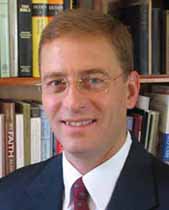
Author Archive

Keep Your Clothes On!

St. Paul writes to the Corinthians:

“For we know that if the tent that is our earthly home is destroyed, we have a building from God, a house not made with hands, eternal in the heavens. For in this tent we groan, longing to put on our heavenly dwelling, if indeed by putting it on we may not be found naked. For while we are still in this tent, we groan, being burdened—not that we would be unclothed, but that we would be further clothed, so that what is mortal may be swallowed up by life. He who has prepared us for this very thing is God, who has given us the Spirit as a guarantee” (II Corinthians 5:1-5).

As is common in the Bible, Paul is speaking in metaphors. We human beings often use figurative language to communicate complicated ideas. When we do so, however, the images which we use sometimes bring along with them connotations which are not helpful.

For example, in the passage above Paul talks about having a “building from God” which then becomes a tent which then seems to become clothing. The building is “eternal in the heavens” but is a tent in which we dwell without which we would be naked! That said, neither the building nor the tent nor the tent become clothing, if worn on earth, would prevent us from being naked in an earthly sense. If you think that this is all too risque, keep your clothes and your hat on too!

In a passage like this, Paul is speaking metaphorically chiefly about baptism. As Paul says in Galatians 3:27, “For as many of you as were baptized into Christ have put on Christ.” Does that mean through baptism that Jesus could launch home, camping, and clothing produce lines and secure a tidy prophet?

The Bible is full of ways of trying to describe and define the seemingly improbably if not impossible with pictures. How can one adequately or even rationally talk about the idea of God becoming a human being? How does one convincingly describe the Trinity, one God in three persons? What does it really mean in baptism when we say with Scripture that we have died and are raised to newness of life when it only appears that we are just a little wetter? Furthermore, Lutherans say that no matter who appears to be performing the baptism, it is really Jesus who is doing it. How can that be?

Similarly, when we celebrate the Lord’s Supper, Lutherans confess that the bread and the wine are actually the body and blood of Jesus. Even though the bread and wine remain bread and wine, Jesus promises to be present in the bread and wine forgiving our sins. Furthermore, regardless of who is speaking the word of institution, i.e. “Our Lord Jesus Christ, on the night when he was betrayed …,” Lutherans say that Jesus is saying those words. How can that be?

In Matthew 10:40, Jesus says, “Whoever receives you receives me, and whoever receives me receives him who sent me.” In other words, or perhaps better, with the words from the Word incarnate, Jesus’s words create their own reality, just like the words of God at creation. When God speaks, it is true. It happens. God’s word by nature is promise, is reality.

This concept is very difficult for us to grasp because we know that human words are so often frail, fallible, and false. To confuse matters even worse, the same mouth which can speaking fallacies one moment, might be speaking God’s truthful promises the next. So, how do we know which words to believe and which words to reject? Sadly, we don’t, but God does.

In the his explanation to the third article of the Apostles’ Creed, Luther writes,

“I believe that by my own reason or strength I cannot believe in Jesus Christ, my Lord, or come to him. But the Holy Spirit has called me through the Gospel, enlightened me with his gifts, and sanctified and preserved me in true faith, just as he calls, gathers, enlightens, and sanctifies the whole Christian church on earth and preserves it in union with Jesus Christ in the one true faith. In this Christian church he daily and abundantly forgives all my sins, and the sins of all believers, and on the last day he will raise me and all the dead and will grant eternal life to me and to all who believe in Christ. This is most certainly true.”

Look at that opening line, “I believe that … I cannot believe…” All by ourselves, our own faith is at best a faith in our faithlessness – such a contradiction in terms! Luther continues, “But the Holy Spirit has called me through the Gospel … just as he calls … the whole Christian church on earth…”

This is part of the good news, God calling us through the gospel. It is all God’s doing, done for us by God as a gift. In spite of ourselves and our sin, God brings Jesus’ words to us sinners through us sinners to proclaim his forgiveness of sins to us sinners. The Holy Spirit takes what appear to be human words and through them creates a divine, living faith in our dead hearts through our deaf ears. How does God make this happen? As Luther explains,

“It is God’s nature to make something out of nothing; hence one who is not yet nothing, out of him God cannot make anything. Man, however, makes something else out of that which exists; but this has no value whatever. Therefore God accepts only the forsaken, cures only the sick, gives sight only to the blind, restores life only to the dead, sanctifies only the sinners, gives wisdom only to the unwise. In short, He has mercy only on those who are wretched, and gives grace only to those who are not in grace” (WA 1:183-184). To which we can only, say, “Amen!” or maybe even, “Hallelujah!” That, however, might be just a little too exuberant for us Lutherans!


Luther on Law and Gospel

[The following paragraphs are taken from Luther’s 1535 Commentary on Galatians 2:14]

“Therefore whoever knows well how to distinguish the Gospel from the Law should give thanks to God and know that he is a real theologian. I admit that in the time of temptation I myself do not know how to do this as I should. The way to distinguish the one from the other is to locate the Gospel in heaven and the Law on earth, to call the righteousness of the Gospel heavenly and divine and the righteousness of the Law earthly and human, and to distinguish as sharply between the righteousness of the Gospel and that of the Law as God distinguishes between heaven and earth or between light and darkness or between day and night. Let the one be like the light and the day, and the other like the darkness and the night. If we could only put an even greater distance between them! Therefore if the issue is faith, heavenly righteousness, or conscience, let us leave the Law out of consideration altogether and let it remain on the earth. But if the issue is works, then let us light the lamp of works and of the righteousness of the Law in the night. So let the sun and the immense light of the Gospel and of grace shine in the day, and let the lamp of the Law shine in the night….

“In society, on the other hand, obedience to the Law must be strictly required. There let nothing be known about the Gospel, conscience, grace, the forgiveness of sins, heavenly righteousness, or Christ Himself; but let there be knowledge only of Moses, of the Law and its works. When these two topics, the Law and the Gospel, are separated this way, both will remain within their limits. The Law will remain outside heaven, that is, outside the heart and the conscience; and, on the other hand, the freedom of the Gospel will remain outside the earth, that is, outside the body and its members. And just as soon as the Law and sin come into heaven, that is, into the conscience, they should be promptly ejected. For then the conscience should know nothing about the Law and sin but should know only about Christ. On the other hand, when grace and freedom come into the earth, that is, into the body, you must say: “You have no business here among the dirt and filth of this physical life. You belong in heaven!”

“Peter had confused this distinction between the Law and the Gospel, and thus he had persuaded the believers that they had to be justified by the Gospel and the Law together. This Paul refused to tolerate. Therefore he rebuked Peter. He did not want to put him to shame, but he wanted to separate these two very sharply again, namely, that the Law justifies on earth and the Gospel in heaven. But the pope has not only confused the Law with the Gospel; but he has changed the Gospel into mere laws, and ceremonial laws at that. He has also confused secular matters and church matters, which is really a satanic and infernal confusion.

“The knowledge of this topic, the distinction between the Law and the Gospel, is necessary to the highest degree; for it contains a summary of all Christian doctrine. Therefore let everyone learn diligently how to distinguish the Law from the Gospel, not only in words but in feeling and in experience; that is, let him distinguish well between these two in his heart and in his conscience. For so far as the words are concerned, the distinction is easy. But when it comes to experience, you will find the Gospel a rare guest but the Law a constant guest in your conscience, which is habituated to the Law and the sense of sin; reason, too, supports this sense” (LW 26:116-117).


Reopening Religious Services

The State of California has decreed that in-person religious service may resume with certain conditions and continued restrictions. In general, these guidelines and key prevention practices include:

✓ physical distancing to the maximum extent possible,

✓ use of face coverings by employees and volunteers (where respiratory protection is not required) and congregants/visitors,

✓ frequent handwashing and regular cleaning and disinfection,

✓ training employees and volunteers on these and other elements of the COVID-19 prevention plan.

Most members of St. Luke’s and of society are already familiar with these general principles. Nonetheless, St. Luke’s will be developing protocols to help ensure that the church resumes regular worship and other activities in a safe manner.

The church’s concern in this matter is primarily the health and well-being of its members, visitors, and the general public. Churches should be places of healing and care, the forgiveness of sin, and the promises of new life in Christ. So, working to keep everyone safe and sound is part of the church’s ethos and reason for being.

The church is also concerned to keep everyone safe and sound because society, and particularly the media, are becoming ever more hostile to Christians. Having the church become a “hotspot” for conronavirus infections would only confirm their antagonism towards the church. It is akin to the difference between a small airplane crash and a car accident. The media loves to report airplane accidents out of proportion. In comparison, they could generally care less about car accidents, unless someone drives into an airplane.

A third aspect to reopening general church activities is the disposition of each member or visitor. Some people due to health conditions, age, or other factors may be hesitant to return to church immediately. Others would have been here “yesterday” had they been able to avail themselves of the opportunity. The church supports its members and their decisions regarding their timing for returning.

In addition to the resumption of specifically faith-related activities, the church also has a number of business matters which need the congregation’s attention. Although it seems as if the world has closed down, and in many ways it has, the church’s business side has continued and is awaiting member input. The April congregational meeting was postponed and a special congregational meeting needs to take place. These will be scheduled most likely on Sunday, 07 June, after church services. Even if you may not want to attend church on that day, attending the meetings would be important. The congregational meetings can be held in the sanctuary if necessary to allow more space for people to congregate for the meeting.

Many other, important church activities will resume in a more gradual way. In March, WSL, academy classes, Sunday School, catechism classes, Bible studies, choir and other activities went dormant. Church leaders in each of these areas will be working to resume those services and activities in a measured way. Some of those may start earlier and others latter. The church council and activity leaders will be providing as much information as soon as possible. So, be on the look out for further information regarding resumption of services and activities in the coming days and weeks.

Finally, the church council is not certain that the church will be able to hold Vacation Bible School (VBS) the week of 13-17 July as originally anticipated. First, the La Mesa Flag Day Parade has been cancelled. So, one of our main advertising events is not available to us. Also, due to the uncertainty regarding reopening, the church has not been able to plan or prepare in a timely fashion. Finally, given the present circumstances, given the high amount of interpersonal interaction involved in VBS, the church is not certain how things like “social distancing” would be managed or even feasible.

On the bright side, this “coronavirus recess” has provided opportunity to reflect, take stock, and find different ways of doing things. If you have suggestions for the future of services and activities at St. Luke’s based on your experiences in the past few months, please let church leadership know.


Meditation – Ascension Sunday 2020

In the church calendar year, today is actually the seventh Sunday of Easter. Ascension was formally (or informally) celebrated last Thursday. By the power vested in me, and as the church calendar year is a human invention, the lessons and prayers for Ascension day are being observed today at St. Luke’s.

Some liturgical purists would object to this deviation from the church calendar year. For them, it is important to do everything “by the book,” as it were. In that same mind set, one should observe the proper liturgical colours, have all the right liturgical gestures and movements, and so forth. Protestants have often labeled such adherence or “being a slave” to detail as being “too Roman Catholic” or in days gone by “too popish.” In reaction, other denominations have gone the other way by dispensing with everything liturgical for something more “free” and “spirit led,” whatever that might be. Even these churches, however, often fall into a particular order or format for their services, even if not expressly liturgical. After all, we need to put some limits on these things. Otherwise, we will miss Sunday afternoon sports or going to the beach or playing golf or having a nap or …

Doing things “by the book” is important for some people. It makes life orderly, predictable, and therefore controllable. Other folks like to be a little (or a lot) more “free flowing,” “taking it as it comes,” and so forth. People organize or disorganize their lifestyles around such matters, and that goes for church too. For some, having a set liturgy choreographed as much as possible is important, often declared necessary or even proper. Others find such worship to be too constricting or even lifeless. Today, it seems that “church camp” style worship “come home” is what people “want.” So, in an effort to get people “through the door,” Sunday worship becomes “summer camp” worship indoors. The tricky bit is deciding where to build the campfire in the sanctuary, and after it is lit, how to convince people despite all the smoke that one is not Roman Catholic burning lots of incense!

So, should we do things “by the book” or not, and if so, by which book? Luke 24:52-53 reads, “And they worshiped him and returned to Jerusalem with great joy, and were continually in the temple blessing God.” At his ascension, the disciples worshiped Jesus then and there, outdoors, perhaps near the “Bethany Jewish Summer Bible Camp.” Who knows? It did not matter. What form of worship did they exercise? Scripture does not say. Did they sing, have readings, quickly build a campfire? Who knows. “They worshiped him and returned to Jerusalem with great joy …” (So, who was Joy, and what made her so great?)

Then, they “were continually in the temple blessing God.” So, how might “worshiping” Jesus differ from “blessing God.” Is “worshiping” done outdoors and “blessing God” done indoors? Where is the liturgical manual when such questions arise? Without a liturgical manual, how could the disciples ever become good Lutherans? Even if one wants to do things “by the book,” by the Book, i.e. the Bible, what might that mean. So, what are we to do?

As we know from our experience and from history, worship styles are not all the same and never have been. Some people are inclined to envisage a “golden age” of worship and seek to restore it or safeguard it today. Others view anything “golden age” as being outdated and outmoded, something that will not resonate with “younger people.” These approaches are both the same in a way. They seem to worry about who is doing the worshiping rather than who is being worshiped. Luke says that the disciples “worshiped Jesus” and “blessed God.” God is always the focus of our worship, which is a response to his gifts given to us in word and sacrament.

The next time that we are able to gather as a congregation, and furthermore the next time that we can do so on “hymnal Sunday,” take some time to notice in the hymnal that the liturgy which we use is annotated with the verses of the Bible. Quite simply and yet profoundly, scripture is the source of our liturgy. Scripture creates the liturgy and gives it life. In other words, when we use the liturgy we are actually doing things “by the Book,” i.e. the Bible. Through the liturgy God teaches us with his word, and then with his own words we worship and bless him for the gift of eternal life given to us in Jesus Christ.


Meditation – Sixth Sunday of Easter

Meditation – Sixth Sunday of Easter

The author of Acts writes:

16 Now while Paul was waiting for them at Athens, his spirit was provoked within him as he saw that the city was full of idols. 17 So he reasoned in the synagogue with the Jews and the devout persons, and in the marketplace every day with those who happened to be there. 18 Some of the Epicurean and Stoic philosophers also conversed with him. And some said, “What does this babbler wish to say?” … 22 So Paul, standing in the midst of the Areopagus, said: “Men of Athens, I perceive that in every way you are very religious. 23 For as I passed along and observed the objects of your worship, I found also an altar with this inscription: ‘To the unknown god.’ …

The Aeropagus often refers to an ancient council in Athens which met at a place called “Ares’ Hill” from the god Ares and Pagos meaning “a big piece of rock.” This council functioned as court dealing with homicide, religious matters, and other crimes. Its power was greatly diminished over time, but it still functioned to some extent under the Romans, who called it “Mars Hill.” According to the text in Acts, there was an altar to an “unknown god” or “agnosto theo” in Greek. Today, those who do not know if God exists are called “agnostics.”

The existence of God or the gods is a topic which has preoccupied humanity since prehistoric times. Simply wondering, “How did we get here?” indicates a desire to know about the origin of all things. Those who study ancient history, philosophy, anthropology, comparative religion, and the like seek answers to this same question. Even children do the same when wondering about their own birth and time before they existed. Just the idea of not having been raises the question of whence we have come, and of course, when might it all be over, and what happens then?

In the ancient world and into modern times, a god or gods were associated with peoples and cultures. These gods provided explanation for the origins of the natural and supernatural worlds, for good fortunes and misfortunes, success and failure, life and death. Since the earliest times, not much different from today actually, human beings would try to appease or pay someone or something to help insure their livelihood and well-being. In earlier days it was the gods; today it is the welfare state, insurance companies, and companies producing face masks and toilet paper.

With the rise of secularism and accompanying atheism, religions and religious scholars and leaders have tried in various ways to continue to find a place for “god” as a way to try to keep their organizations and themselves relevant. If religious leaders can just find a way to help people believe that they actually want or need a “god,” then maybe those people will come to “our church” and prevent it from dying. So, churches, particularly in western societies, do their best to make “god” relevant; that is, to make “god” attractive to non-believers. Then, “once we get them in the doors, we can give them the real Jesus!” So, which Jesus is that?

This very approach, however, is based on unbelief in the real Jesus or on belief in a pseudo-Jesus. Either way, it is the same. The question for each of us is the same as for “them.” Do we really have anything more than a “god” created in our own image? Do we have an “unknown god” or a “god only known to us,” or do we have the one true God who knows us, and if the latter, how do we know?

Martin Luther in his exceedingly insightful way, defined having a god this way in his Large Catechism, “If your faith and trust are right, then is your god also true; and, on the other hand, if your trust are false and wrong, then you do not have the true God; for these two belong together, faith and God. That now, I say, upon which you ‘hang’ your heart and entrust it is actually your god.”

With that definition, most of us have a god known only to us, and even then we probably are not quite sure how many gods we might actually have, and who or what these gods are since we put our trust in so many things, never taking the time, most of the time, to think about it at all.

In stark contrast to our predilection to creating many gods per day, most of which are a reflection of ourselves even if unknown to ourselves, the one true God revealed to us in Jesus Christ revealed himself to us in the life, death, and resurrection of Jesus Christ. Who among us would find it useful or advantageous to pick a wandering religious carpenter to be our god? Which one of us would happily align ourselves with the crucified carpenter? In our world filled with sin, evil, misfortune, disease, and death, how many people honestly believe in a resurrection from the dead, not to mention that Jesus was actually raised from the dead?

The God who knows sinners from the inside out sent his son in human form to bear our burdens and sins, to die our death, and to give us his promise of forgiveness of sins and the gift of eternal life. To this, the world replies, “Yet, but what does he know?” He knows that “knowing” him or “knowing of” him is not enough.

God sent Jesus to us not to appeal to our intellects or to our knowledge or to our reason which neither know or believe in God. The incarnation, the crucifixion, and the resurrection are God’s way of bypassing ourselves to reach into ourselves to save us from ourselves. Through the proclamation of Jesus’ life, death, and resurrection, God speaks to our hearts, and even our hearts cannot hear him without the work of the Holy Spirit.

So, what can we do to make Christians? The answer is, “Absolutely nothing!” except teach and preach the gospel of Jesus Christ purely and then trust God and God’s word to do it all.


Meditation – Fifth Sunday of Easter 2020

Meditation – Fifth Sunday of Easter 2020

John writes,

“1 Let not your hearts be troubled. Believe in God; believe also in me. 2 In my Father’s house are many rooms. If it were not so, would I have told you that I go to prepare a place for you? 3 And if I go and prepare a place for you, I will come again and will take you to myself, that where I am you may be also” (John 14:1-3).

Jesus says, “In my Father’s house are many rooms,” and who do you think is cleaning those rooms? Just look at the universe. The fallout from creation is scattered about the universe. Everywhere one looks in space there is cosmic dust, dirt, and debris all over the place, light years in every direction as far as the eye and telescope can see.

So, if this is how God leaves the universe after a little creative activity, what would the rooms look like which Jesus is preparing for his disciples? Judging from most of the rooms of most males whom I know, of whatever age, they are not going to be the most tidy of places. In houses or apartments where males live, even places which the involve “getting clean,” like bathrooms, often become hot spots for biological experiments in bacteria, molds, and other critters. When my parents would go away on holiday, I would leave the remaining coffee from the day of their departure in the coffee pot just to see how much mold would grow before their return. Sometimes, I would forget to clean the coffee pot before they got home. Oops! They were not as enthusiastic or as amused as I was about such potential for growth.

So, who is instrumental in making sure that we are cajoled and coerced into keeping our rooms and parts of the house tidy? It is our mothers, usually.

Today is Mother’s Day in the USA. In the UK, Mother’s Day or Mothering Sunday was the fourth Sunday in Lent. Thus, in our house my wife has two Mother’s Days. Some mothers are tidy, some not. Some mothers are good cooks, others not. Mothers, like everyone else, have all manner of different abilities, attributes, attitudes, and aptitudes. Some mothers are excellent, and others have their children removed from them. Most fall into the psychoanalytic category of “good enough” mothers

Whatever our mothers are or are not, none of us would be here without them. Although God the Father created the whole universe in a rather explosive, untidy fashion, God the Son was born of a woman (Gal. 4:4). Through the conception of Jesus in Mary, God set all women apart and made their bearing of children a divine activity. Each birth reflects not only the miracle of creation but also the death-defying gift embodied in Jesus’ resurrection. Although we all are born “little devils,” fallen from our birth into sin and death, God sustains us, all of us, in ways which we often find completely incomprehensible, despite the forces of sin and death in and around us.

In the church, women are involved in seemingly countless and often thankless activities and tasks which either directly or indirectly help to bring about the birth and nurture of faith in each new generation. A faith needs to be continually fed, like a child, to grow and to remain healthy. The “little devil” in all of us quickly and easily gets up to all manner of mischief, and the rooms of our lives become a mess, experimental laboratories for all manner of mayhem. The gift of faith given to each new generation in a “good enough” way, is the gift of eternal life from the “word made flesh,” from the one who is “the Way and the Truth and the Life” himself (John 14:6).

So, today we thank all those “mothers” among us who give the gift of faith at St. Luke’s in so many ways. Please remember to pop around, or to send someone around, today between 10:45 – 11:15 am to collect a little gift from St. Luke’s on this Mother’s Day 2020 as an expression of our appreciation.


Meditation – Fourth Sunday in Easter 2020

Meditation – Fourth Sunday in Easter 2020

John 10 says,

“‘Truly, truly, I say to you, he who does not enter the sheepfold by the door but climbs in by another way, that man is a thief and a robber. 2 But he who enters by the door is the shepherd of the sheep. 3 To him the gatekeeper opens. The sheep hear his voice, and he calls his own sheep by name and leads them out. 4 When he has brought out all his own, he goes before them, and the sheep follow him, for they know his voice. 5 A stranger they will not follow, but they will flee from him, for they do not know the voice of strangers.’ 6 This figure of speech Jesus used with them, but they did not understand what he was saying to them.”

This snippet of our gospel lesson today reflects the heart of the Christian life and of human life in general. Human beings are linguistic beings. Whereas other animals have the ability to communicate with each other, often in intricate ways, we are not aware of any other creatures which have the ability to speak and communicate with each other as humans do. Think about all the languages on the face of the earth, the variations in culture and patterns of thought which arise from different ways of conceiving and communicating the world which we experience.

In comparison to many other parts of the world, most of us Americans are locked into one language. That English today is the world’s lingua franca is a rather ironic. This fact makes us less likely to need or want to learn a different language. The closest most of us might get to learning a foreign language, in addition to ordering at the local taco shop, is taking enough foreign language in high school as a requirement for college admission. If we got suddenly dropped into that language’s country, however, might we have enough language skill to order a meal at a restaurant, or even read the meu?

Our linguistic limitations limit our thinking ability even within our use of our own language. Most of us consider ourselves “fluent” in English, but if the topic of conversation should turn to the intricacies of nuclear physics or micro-economics or macrame or …, we might find that we are literally at a loss for words. We quickly become lost in the conversation itself and are at a loss what to do about it. Furthermore, the language which one uses creates all manner of associations which take place at a less than conscious level. Impressions are created without us, ironically, giving them much thought. These impressions then guide our conscious thoughts, decisions, and activities.

In our world, we are flooded with words from non-godly and ungodly sources. Most of what we hear, read, and say has very little to do with the word of God. Of all the words which you hear or read on any given day, what percentage of them come from the Bible or are related to it? We probably do not want to think about it. (Pardon me, I just need to check my Facebook feed and wall and marketplace). Right, then, now where were we?

That’s right, God, how could I forget? “The sheep hear his voice, and he calls his own sheep by name and leads them out. When he has brought out all his own, he goes before them, and the sheep follow him, for they know his voice. A stranger they will not follow, but they will flee from him, for they do not know the voice of strangers.’ This figure of speech Jesus used with them, but they did not understand what he was saying to them.”

Do we understand? For the past six weeks or so, the State of California and the County of San Diego have effectively said, repeatedly with the threat of legal enforcement, that your church is a dangerous place to be, a potential death chamber, not a sanctuary. Of course, those are not the exact words which are being used, but the effect is the same. By dividing society into “essential” and “non-essential” areas of life, the politicians and health officials have sought to create categories of “safety.” Unfortunately, however, the “safe” category also creates the converse category by insinuation. “Essential” areas are perceived to be “safer” while “non-essential” areas are more dangerous. Is that really true? What scientific evidence supports this notion?

On the topic of scientific evidence, if the County health officials consider themselves to be so omniscient and omnipotent in relation to the coronavirus and if wearing face masks is so helpful, then why has the County of San Diego waited until 01 May 2020 to make wearing masks mandatory? Please recall, six to eight weeks ago, wearing masks was not advocated because they were ineffective or perhaps even counterproductive. So, what will the all-knowing health officials say next?

So, if at some point, the State and the County “ease restrictions” and tell us that our church is again a safer place to be, will we believe them, or will the fears which they have instilled in us, both health and legal, hold sway? Will we continue to believe those who said six weeks ago that in eight weeks time 25.5 million Californians would have the coronavirus (instead of only 50,000 infected with 2,000 deaths), or will we place our trust more in the words of the one who has died, who was killed with all manner of misinformation, and who was raised from the dead so “that [we] may have life and have it abundantly” (John 10:10)? Regardless of present circumstances, that is essentially and always our daily question. Do we listen more to the mortal voices of fear and death or to the divine promises of forgiveness, life, and eternal life?


Meditation – Third Sunday in Easter 2020

Luke writes,

“13 That very day two of them were going to a village named Emmaus, about seven miles from Jerusalem, 14 and they were talking with each other about all these things that had happened. 15 While they were talking and discussing together, Jesus himself drew near and went with them. 16 But their eyes were kept from recognizing him.”

“Their eyes were kept from recognizing him.” Why was that the case? Was Jesus perhaps wearing a face mask? We should surely hope so, but according to the Bible, Jesus did not appear to have a mask, and he obviously did not get the memo about social distancing, just popping out of nowhere while “two of them” were out for a stroll. Perhaps Jesus had missed the news. The “two of them” on their way to Emmaus seem to think that he is the only one not up-to-date on events in Jerusalem. One could, however, have a little sympathy for the poor chap. If you had been locked in a grave for a few days, you too might not have heard about the global threat of death in which the media is currently relishing or, perhaps better, rolling like pigs in mud.

To make matters worse, in the middle of this particular pericope (Luke 24:13-35) Jesus seems to turn the tables on his walking companions. After they had done their best to inform Jesus of his own arrest, trial, death, and unreliable reports of his resurrection, Jesus then calls them names. The ESV translation says, “O foolish ones, and slow of heart to believe all that the prophets have spoken!” The term “O foolish ones” in Greek can also mean unthinking, unintelligent, senseless devoid of understanding, or just plain stupid.

So, one can almost hear his “unthinking, unintelligent, senseless devoid of understanding, or just plain stupid” walking companions saying to themselves, if not to him, “Thank-you very much you ‘unthinking, unintelligent, senseless devoid of understanding, or just plain stupid’ nit-wit, but who do you think that you are?” That is the crux of the matter. Who did Jesus think that he was? Only some “unthinking, unintelligent, senseless devoid of understanding, or just plain stupid” person today would phrase that question instead in the present tense, “Who DOES Jesus think that he IS?”

In the midst of the current coronavirus crisis, the very notion of God has been relegated to the “unthinking, unintelligent, senseless devoid of understanding, or just plain stupid” members of society. If this has not been done by society as a whole, then it has been done by the State of California and the County of San Diego. The state, county, and media seem more than happy to portray Christians or other religious groups wanting to gather as “unthinking, unintelligent, senseless devoid of understanding, or just plain stupid.”

Unfortunately, it does not seem to register with the state, county, and media that if the coronavirus is still spreading and killing, then it must be the “essential workers” who are most likely responsible because they are practically the only ones out and about. The irrational criteria used by politicians to divide society into “essential” and “non-essential” persons and groups is a very reminiscent of George Orwell’s book “Animal Farm” characterized by the hallmark phrase, “All animals are equal, but some animals are more equal than others.”

Perhaps the most equal and most essential, at least in their own eyes, are the politicians themselves. By their self-designated, most “essential” status, they have declared God, scripture, faith, and religious practice and existence to be “non-essential.” Why do some states allow constitutionally guaranteed freedoms, and why are such freedoms denied in California and especially in San Diego County?

Divisions between the more and less equal in society stem from a fundamentally great divide. The great divide in the US, and in the western world in general, is between people of faith and those who either do not have any faith or have only a nominal faith. This division cannot just be understood as a split between “conservatives” and “liberals,” even if that is a factor. The divide is not between “the right” or “the left,” although that often seems the case. It also cannot be explained fully by the “enlightened” raising themselves above the “plebs,” but that often happens. Specifically in the coronavirus conundrum, the matter is not so simple as a difference of opinion between the “conscientiousness of reasoned faith” and the “recklessness of blind faith,” which is an interesting topic in itself.

The great divide is great not because of people but because of God. Those who believe in God believe in a reality greater than their own existence, and that greater reality guides and informs their lesser, individual and group realities. Those who do not believe in God or have only a nominal faith in something they call “god” consider themselves and their reality to be the greater reality. Because they have no greater “god,” they essentially make themselves into a or even the “god,” thus becoming one of a few select “essential gods” who create reality in their own images. This pseudo-divine reality is not the invention of modern humanity or the coronavirus elite. Offering the forbidden fruit to Eve and Adam, the serpent said, ‘You will not surely die. For God knows that when you eat of it your eyes will be opened, and you will be like God, knowing good and evil’” (Genesis 3:4-5).

The general panic in society due to the conronavirus is the reaction of a world without God, without the promise of the forgiveness of sins, without the proclamation of the resurrection of the dead, and without the promise of eternal life. The seemingly complete disregard for God, scripture, and the constitutional freedoms to practice one’s religion, as “ordered” by many politicians in the US, is the reaction of self-deifying politicians, who in their compulsion to “play God” have declared themselves to be “right,” to be the greater good, to be the greater “god,” and thus the greatest determiner of our collective reality.

So, who is the God or god of your reality? If Jesus popped into your living room and asked what is happening in your home, town, state, or world, what would you say? Before you reply, remember and consider that he is already always there in whichever room you live, even if you do not recognize him.


Meditation – Second Sunday in Easter 2020

John’s Gospel states,

“19 On the evening of that day, the first day of the week, the doors being locked where the disciples were for fear of the Jews, Jesus came and stood among them and said to them, ‘Peace be with you.’ 20 When he had said this, he showed them his hands and his side. Then the disciples were glad when they saw the Lord. 21 Jesus said to them again, ‘Peace be with you. As the Father has sent me, even so I am sending you.’ 22 And when he had said this, he breathed on them and said to them, ‘Receive the Holy Spirit. 23 If you forgive the sins of any, they are forgiven them; if you withhold forgiveness from any, it is withheld.'”

The metaphor continues. Last week, I mentioned that the County of San Diego outlawing gatherings in a surprise move on Maundy Thursday was metaphorical for the first “Maundy Thursday.” I also mentioned that the federal court siding with the County’s and State’s breech of the US constitution was metaphorical for the first “Good Friday.” Finally, in light of the Easter Sunday gospel text, I urged us to be living metaphors, carrying/bringing Easter tidings to our communities. With today’s gospel text, the metaphor continues.

“On the evening of that day, the first day of the week, the doors being locked where the disciples were for fear of the Jews,…” The disciples were afraid. They were in hiding. They were in self-quarantine, in lock down. We could spend time discussing the rationalizations which they might have made to and for themselves for their actions. It does not matter what rationalizations we make when we are afraid, because regardless of the day, age, or circumstances, those rationalizations are roughly the same. When we are afraid, we hide – or run – or deny – or make excuses – or … These events are true, but the names are always changed to protect the guilty.

San Diego County has banned gatherings. That unconstitutional decree did not apply just for Holy Week and Easter. It continues, which is why the metaphor continues. Like the disciples, we are hiding. Some are hiding from the coronavirus, which is good. Some are hiding from other people out of fear of the coronavirus, which is questionable. Some are hiding because they would be afraid to be seen at church this morning. Some are hiding because their churches have told them to stay home to protect themselves from legal harassment, and some just cannot hide the fact that they cannot help or hide themselves.

As Christians, we are generally rule followers. If we take a cross section of society, who are those who generally not only follow the rules, but also work hard to ensure that rules are followed for ourselves and for the well-being of all. In both biblical and Lutheran doctrine, we generally follow the rules because we believe that even secular laws have their origin in God’s rule, even if secular society does not act in accordance with God’s rules. (That was a play on words. Now chuckle.)

We currently find ourselves in a legal conundrum in the State of California and in the County of San Diego. The State of California allows a proliferating cannabis industry to thrive in flagrant violation of federal law, and furthermore, the State has declared this illegal industry to be “essential.” Similarly, the State of California not only accommodates and shields untold numbers of illegal aliens, but this week Governor Newsom pledged to reward this illegal behaviour with $500 bonuses of tax payer money. Willingly or not, California tax payers, who follow the rules by paying their taxes, will assist the State of California to be rule breakers and to support Federal rule breakers. It boggles the mind. The draconian declaration by the County of San Diego barring freedom of religion and assembly is par for the course on which the State of California has set sail.

People can and do argue about the legality of these and other matters. People make all manner of arguments about how coronavirus lock downs protect society, which by and large seem appropriate. However, when people are afraid to attend church for fear of legal harassment by local or state officials, a line has been crossed. The First Amendment to the constitution is clear, “Congress shall make no law respecting an establishment of religion, or prohibiting the free exercise thereof; or abridging the freedom of speech, or of the press; or the right of the people peaceably to assemble, and to petition the Government for a redress of grievances.” In other words, the First Amendment is non-negotiable, but for the “Nation-State” of California (or should that be “rogue-state”), flouting federal law is par for the course.

So, when the secular rule makers prove themselves to be great law breakers, what is a Christian to do?

Apart from all the legal and ethical intricacies, people are afraid. They are afraid of transmitting or contracting a virus. They are afraid of gathering or not gathering. They are afraid to go to church and not to go to church. What should Christians, as people who to take pride in following the law, do? To whom should we listen?

Whenever and wherever we are hiding in whatever stage or circumstances in our lives, we cannot hide. Jesus knows where we are, even when we have locked ourselves away in unrepentant, rule breaking lives, i.e. in flagrantly sinful life styles. In the midst of sinful fear and self-centred quarantine, Jesus appears and says, “Peace be with you.” Most of the time, we think that we are hearing voices. Jesus for our society is dead, and we often have little more affinity to him than happy recollections from childhood Sunday school. Again, he says, “Peace be with you.” Why does he go on like that? Can’t he tell that we are in hiding and afraid?

Then, he says continues, “As the Father has sent me, even so I am sending you… Receive the Holy Spirit. If you forgive the sins of any, they are forgiven them; if you withhold forgiveness from any, it is withheld.” He has commanded us to leave our fear and hiding behind and to be sent like he was sent. Where did that end? Where will that end for us, on a cross, facing legal harassment by non-law abiding statutory bodies whose very ethos entails injustice in the name of justice? Jesus seems to have a couple of nails loose.

Where are we really? Everyday in the County of San Diego in sunny, southern California, life is always another day in the Garden of Eden. Each day we are forced to decide whether to listen to God’s voice or all the other voices (and vices) within and without. Each and every day, we listen to the wrong voices. As a result, we live to die not just another day but that same day. We listen to … Well, you know those familiar voices and vices which flagrantly rule our lives in place of God.

When God the Father raised God the Son from the dead, he raised Christians to a life beyond the rules. “For Christ is the end of the law for righteousness to everyone who believes” (Romans 10:4). Likewise, “There is therefore now no condemnation for those who are in Christ Jesus. For the law of the Spirit of life has set you free in Christ Jesus from the law of sin and death” (Romans 8:1-2). Finally, “But now the righteousness of God has been manifested apart from the law, although the Law and the Prophets bear witness to it— the righteousness of God through faith in Jesus Christ for all who believe. For there is no distinction: for all have sinned and fall short of the glory of God, and are justified by his grace as a gift, through the redemption that is in Christ Jesus, whom God put forward as a propitiation by his blood, to be received by faith” (Romans 3:21-25).

Through the life, death, and resurrection of Jesus Christ, God has placed us under a different rule, his rule. God has transformed us from rule followers into Christ followers. As Jesus was sent, so too are we sent to those who whose lives are ruled by fear and death, by the fear of death and death itself.

This is the essence of the doctrine of justification by faith alone. That doctrine often seems so abstract and lifeless, even to us Lutherans, but when faced with the prospect of legal harassment by statutory bodies, which flout the highest rules of the land, it reminds us that following the rules cannot and will not save us. We are saved only because we are justified by grace alone through faith alone in Christ and his word alone.

Listen to the words from Article VII of the Augsburg Confession, a chief Lutheran statement of faith states:

“It is also taught that all time there must be and remain one holy, Christian church. It is the assembly of all believers among whom the gospel is purely preached and the holy sacraments are administered according to the gospel.”

In Lutheran theology, the church gathers and scatters on a regular basis. In other words, if we are not gathered, then we are not the church, even if we still remain Christians. By its very nature, being church does not entail merely sending words out over the internet. Church happens where the saints gather to receive the gospel of Jesus Christ purely proclaimed and administered in word and in sacrament. Furthermore, we gather to have that gospel proclaimed to us because we all know how easily we listen only to what our sinful selves want to hear from our ourselves, because in reality each one of us is a self-contained, self-quarantined, locked down, individual Garden of Eden.

Without a doubt, California’s new, electronically mediated, state religion is diametrically opposed in theory and in practice to the heart and life of the Christian faith. We all know, however, that we do not need the State or the County to separate us from God and his word. We do that all by ourselves, every single day. In fact, we self-isolate from God’s word so often that we may be secretly grateful to the coronavirus for covering our backs, for giving us an excuse to avoid church.

But then, while safely tucked away in our hiding place, Jesus is there. He keeps saying, “As the Father has sent me, even so I am sending you… Receive the Holy Spirit. If you forgive the sins of any, they are forgiven them; if you withhold forgiveness from any, it is withheld.”

So, get off of your couch. Gather up your household. Put on your face mask. Get out of your house, and go. Go somewhere today where people can legally gather, like a supermarket. While keeping social distancing, tell the people there that Jesus is raised from the dead, as he said. Wish them a Happy Easter! Sing an Easter hymn to those gathered. Share the good news to all whom you see. It is time for us to bring the Easter service to them, to be living metaphors, bearing and carrying the gospel over to others and getting the message across to them.


Meditation – Easter Sunday 2020

(Please read this to the end.)

Easter Sunday 2020 has assumed ominous proportions. It is often difficult for us fickle, fallible, fleshly, finite human beings to grasp the gravity of life around us. To make sense of things, we often resort to figures of speech, word pictures, to help us understand and communicate complex matters to one another. Jesus is famous for using parables. The word parable literally means something thrown alongside something else, one thing to represent another.

Parables are more involved metaphors. Metaphor literally means something carried or borne across or over. The Oxford Diction defines a metaphor as “a figure of speech in which a word or phrase is applied to something to which it is not literally applicable.” A famous metaphorical example from the Bible is, “Be sober-minded; be watchful. Your adversary the devil prowls around like a roaring lion, seeking someone to devour” (I Peter 5:8). The devil is not a lion, and a lion is not the devil, but one image conveys the voracious nature of the other; no lyin’ about that.

This Holy Week and Easter are rich with metaphors provided by the coronavirus conundrum. In a nutshell or a capsid, no one really knows what to do. So, it is generally decided that as a society we will not do – just about anything. So, how does that relate to Holy Weeks and Easter 2020.

Along time ago in a far away corner of the world there lived a man who displayed rather curious characteristics. He seemed an average handyman, carpenter type, but he also possessed bold theological insights. He was smart, seemingly much smarter than the religious leaders of his day. More exciting, and yet more disturbing, he was not conforming to social and religious norms, traditions, practices, and laws.

This man, called Jesus, did not hold to conventional wisdom about people. He associated with shady extortionists collecting tax on behalf of the Romans, and he spent time with prostitutes. He dabbled in the demonic, or at least he stopped the devil from devouring some people. He came dangerously into close contact with those plagued and afflicted with contagions, those on “lock down” or locked out of society. Except for this Jesus, seemingly everyone else treated such people like lepers.

As this Jesus wandered about the place performing his many so-called miraculous deeds, captivating the crowds, doing neat tricks with bread and fish, time and again he went too far. People who break the rules, if not by nature then by definition, are a danger to society. Every human group has its conventions, rules, and protocols, some good and some bad. If one is involved in organized, or not so organized crime, then one should not collude with the police, and vice versa. Political dissidents in communist countries were regularly declared mentally ill and locked in “mental hospitals” to protect society from such “madness.” The list of such dysfunctional examples trying to make people conform to dysfunctional ends is endless. How does it work in your family?

Last week on Palm Sunday, we celebrated the arrival of Jesus in Jerusalem as the “King of Israel” (John 12:13). As John 12 describes, Caiaphas knew that this “king” was a danger and that this man must die to save the nation. Metaphorically speaking, some weeks ago the coronavirus, the “crown” virus, and thus the “king” virus, came to town and began to rule the world. Those today “in charge” are charged to predict and to control and to destroy this king for the sake of the nation. Decisive action is needed to make the predictions of its death come true.

On what we now call Maundy Thursday, Jesus was gathered with his disciples, celebrating the Passover. Then, in the cover of darkness the soldiers and temple officials came to end the party and arrest the problem person. Ironically, this week on Maundy Thursday, Dr. Wilma Wooten, the Public Health Office for San Diego County, put an end to gatherings public or private and has threatened to arrest problem persons who congregate, especially for Holy Week and Easter observances. Dr. Wooten’s decree this Thursday metaphorically reflects the events of the first Maundy Thursday so long ago.

As an aside, at the moment, San Diego County has very few cases of coronavirus, a 0.0005% infection rate and a 0.00001% death rate, well below the forecast 2% or 3%. In fact, as reported to me by a clinical healthcare manager, one health system in the county is actually laying staff off because the coronavirus is apparently “killing” the hospital business, but back to the metaphors.

On “Good Friday” of Jesus’ last week, he was forced to appear for trial. The evidence was scant. All manner of false claims were made against him. The witnesses were speculative and contradictory. That did not matter. Those “in the know” knew that Jesus was guilty and deserved to die.

On Good Friday of this week, Abiding Place Ministries in Campo sought a temporary restraining order to lift Dr. Wooten’s decree. It was a matter of their constitutional rights. U.S. District Judge Cynthia A. Bashant, however, sided with the county. What was the rationale? Who knows exactly. I have spoken to two attorneys this week, both expert in U.S. Constitutional law. Both agree that the county’s order banning gatherings infringes on our fundamental legal rights.

Metaphorically, District Judge Bashant’s decision against Abiding Place Ministries reminds of Jesus’ trial. Regardless of what the US constitution may say, Christians cannot count on the courts to protect them. Scant, contradictory, and speculative evidence against Christians still carries the day, even today.

I view these phenomena from an unusual perspective. As some are aware, I worked for Britain’s National Heath Service for nearly a decade involved in the prevention, testing, and treatment of communicable infections. In my first post, I was directly accountable to the county’s director of public health medicine. Some of the implemented prevention measures were considered radical at the time. In a subsequent position I served as a clinical specialist health adviser in a district general hospital. I have given countless health education and disease prevention talks and lectures to all manner of professional groups. When I disagree with unfounded, unscientifically proven, blanket bans on church activities, I do so with good reason.

Two more metaphors are at play relating the first “holy week” to this Holy Week.

Guards had been placed outside Jesus tomb to prevent his disciples from gathering, stealing his body, and claiming him to be raised from the dead. This would only create a flare-up of the problem just laid to rest. Too scared or ashamed, his disciples kept “social distance” from the tomb. Instead, only a few women gathered to look at his grave.

They feel the earthquake and see the angel. The women at the grave were shaken by circumstances, literally. “Fear not!” he says. “Jesus is not here. He has been raised.” Then, offering them no pity, the angel commands them to go and tell his disciples.

Then, on their way Jesus is there! He meets them saying, “Fear not! Go forth!” “Proclaim” (apa-angello – be angels) to my disciples.

Supposedly, we cannot gather today, Easter Sunday, for services. This gives us pause for thought. Perhaps we need to ask ourselves whether gathering in church on Easter Sunday is really what we should be doing. What happened on that first Easter Sunday? The women were told, “Fear not! Go forth!” and they did just that.

Without a doubt, the County of San Diego has violated our First Amendment rights, and we should be grateful. The county’s decree should shake us out of the complacency and comfort of our congregating. Every year, we make grand Easter plans, and yet there are people all over this county who would never darken the door at St. Luke’s nor any other church door in the county. This year we have been blessed. Instead of trying to attract the Unlikelies and the Improbables to our door, this year we have been given an unprecedented opportunity. Today, we are called and commanded and sent, both metaphorically and literally, to be angels, sent to announce, sent to proclaim the Easter message to those whose lives are overwhelmed with the fear and uncertainty which repeated bad news instills in its victims.

Today is Easter Sunday! Christ is risen! He is risen indeed. So, get off of your couch. Gather up your household. Put on your face mask. Get out of your house, and go. Go somewhere today where people can legally gather, like a supermarket. While keeping social distancing, tell the people there that Jesus is raised from the dead, as he said. Wish them a Happy Easter! Sing an Easter hymn to those gathered (two are attached in PDF with this email). Share the good news to all whom you see. It is time for us to bring the Easter service to them, to be living metaphors, bearing and carrying the gospel over to others and getting the message across to them.

Then, on Monday, start to make plans to do something similar every Sunday until we can meet again at St. Luke’s Lutheran Church.


Mark Menacher PhD. Pastor

Copyright © 1996-2026 Pastor Mark's Blog. All rights reserved.
Jarrah theme by Templates Next | Powered by WordPress